uPVC is the premium material behind modern high-performance windows and doors — and it's why more Canterbury homeowners are making the switch.
uPVC stands for unplasticised polyvinyl chloride. Unlike standard PVC, which is softened with plasticisers to make it flexible, uPVC contains no added plasticisers — making it rigid, highly durable, and exceptionally stable over time.
First developed in Europe in the 1950s and refined over decades of engineering, uPVC has become the world's most trusted material for windows and doors. It's used in over 70% of new window installations across Germany, the UK, and Northern Europe.
The same properties that make uPVC ideal for Europe — excellent insulation, strength, and weather resistance — make it equally well suited to the Canterbury climate.
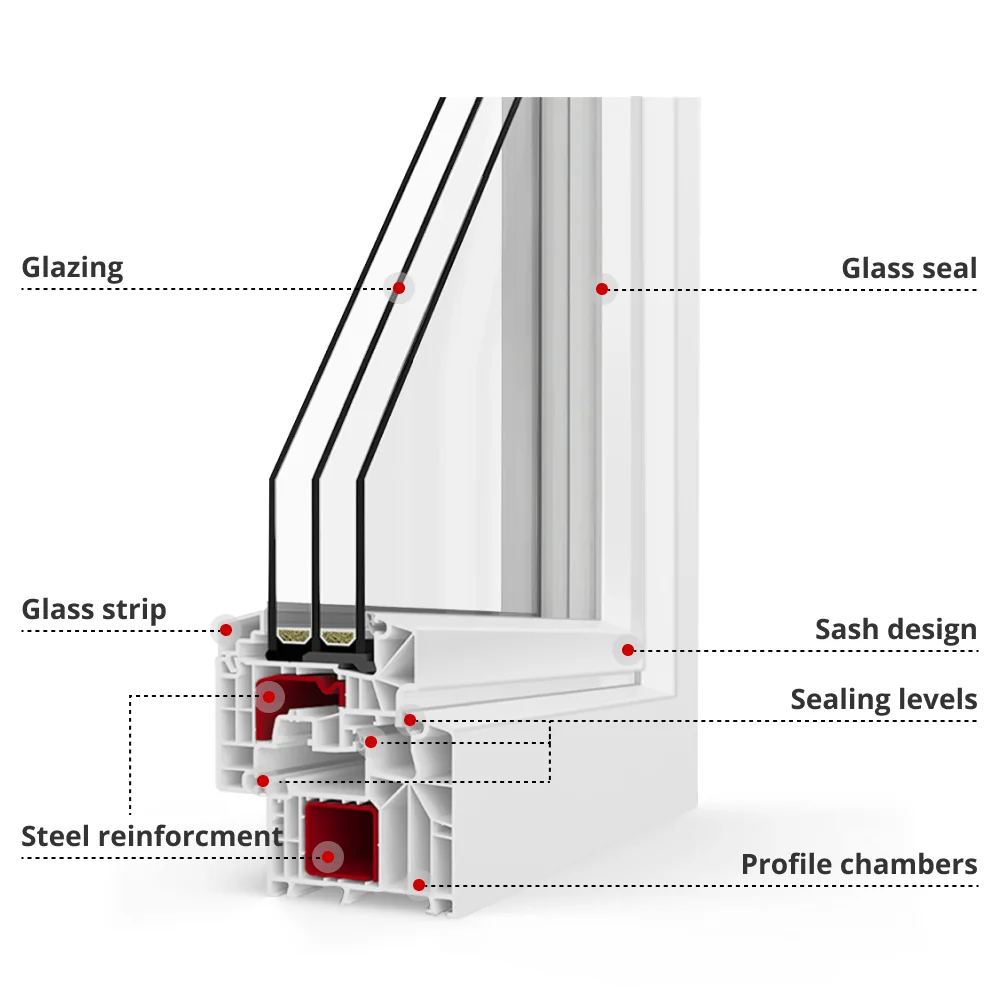
uPVC isn't just an alternative to timber or aluminium — in most cases, it outperforms both on every measure that matters.
Multi-chambered uPVC profiles trap air inside their hollow sections, creating a thermal barrier that dramatically reduces heat loss. Combined with double or triple glazing, uPVC windows can cut heat loss by up to 70% compared to single-glazed aluminium.
uPVC doesn't rust, rot, or corrode. It won't swell or warp in damp conditions, making it ideal for Canterbury's variable climate — from hot dry summers to cold, wet winters.
Modern uPVC frames are reinforced with galvanised steel inside the profile, giving them exceptional strength. Paired with multi-point locking systems, uPVC windows and doors offer a significantly higher level of security than older frames.
The dense, multi-chambered structure of uPVC profiles absorbs sound effectively. Homes near busy roads, schools, or flight paths see a meaningful reduction in noise after switching to uPVC glazing.
Unlike timber, uPVC never needs painting, sanding, or sealing. An occasional wipe-down with soapy water is all it takes to keep it looking new — year after year, decade after decade.
uPVC is UV-stabilised, so it resists fading and yellowing even in high-UV environments. Properly installed uPVC windows have a lifespan of 30–50 years, making them a genuinely long-term investment.
Not sure which material is right for your home? Here's an honest side-by-side comparison.
| Feature | uPVC | Aluminium | Timber |
|---|---|---|---|
| Thermal insulation | ✔ Excellent | ✘ Poor (conducts cold) | ◎ Good |
| Maintenance required | ✔ None | ✔ Minimal | ✘ Regular painting/sealing |
| Rot / rust resistance | ✔ Fully resistant | ✔ Resistant | ✘ Susceptible to rot |
| Noise reduction | ✔ Excellent | ◎ Moderate | ◎ Good |
| Security (reinforced) | ✔ High | ✔ High | ◎ Moderate |
| Lifespan | ✔ 30–50 years | ✔ 20–30 years | ◎ 10–20 years (with maintenance) |
| Upfront cost | ✔ Competitive | ◎ Mid–high | ◎ Variable |
| Energy bill savings | ✔ Significant | ✘ Minimal | ◎ Moderate |
Canterbury homes face specific challenges — cold winters, UV-intense summers, and earthquake risk. uPVC is well suited to all three.
Canterbury winters can be harsh. uPVC's multi-chambered profiles and warm-edge spacer bars in the glazing unit keep heat inside where it belongs — reducing reliance on heating and lowering power bills.
New Zealand has some of the highest UV levels in the world. Our uPVC profiles are fully UV-stabilised, meaning they resist fading, chalking, and brittleness even after decades of direct sun exposure.
All our uPVC products are certified to AS/NZS 4211 — New Zealand and Australia's joint standard for windows and doors. This ensures structural performance, weathertightness, and safety in NZ conditions.
We source precision-engineered uPVC profiles built to European standards — designed in a part of the world where window performance genuinely matters, then adapted for the Southern Hemisphere.
New Zealand's Healthy Homes Standards require adequate insulation and ventilation. High-performance uPVC windows help landlords and homeowners meet these requirements comfortably.
Cold aluminium frames are a common cause of condensation and mould in NZ homes. uPVC's insulating properties keep the frame surface warmer, dramatically reducing condensation and improving indoor air quality.
Get a free, no-obligation quote and see what uPVC can do for your home. We're happy to answer any questions.
Request a Free Quote